Tires & brakes · Millis, MA
Wheel alignment in Millis, MA
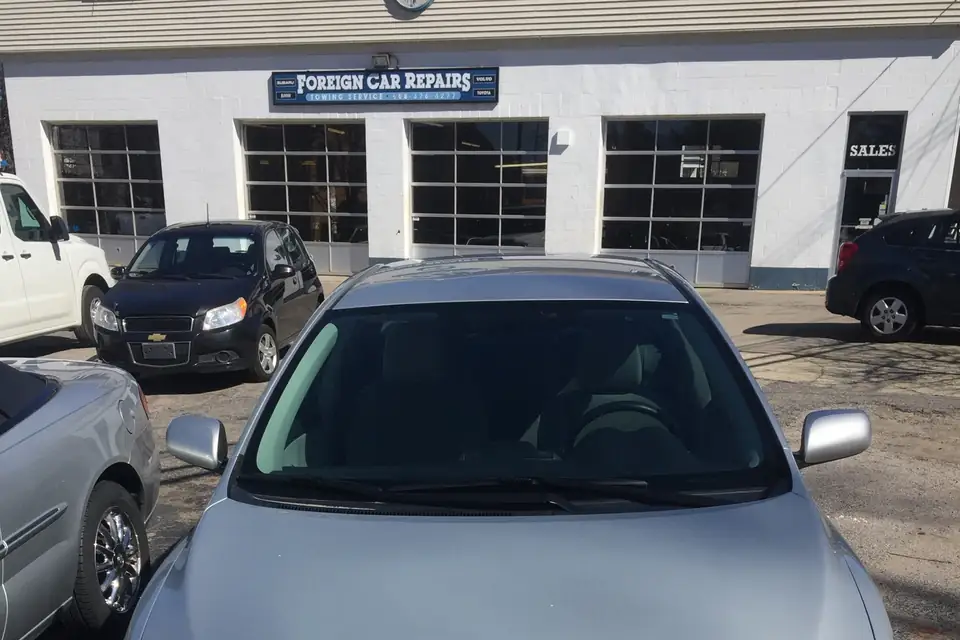
If the car pulls to one side, the steering wheel sits off-center, or the tires are wearing on one edge, the alignment is the first thing to check. Foreign Car Repairs does wheel alignment on-site at 943 Main Street in Millis, on our own in-house alignment machine, along with the suspension inspection that should come with it.
This page explains what alignment actually adjusts, the signs you need one, what throws it off, and why worn suspension parts have to be fixed first. For vibration at highway speed, see tire balancing.
- In-house alignment machine
- Wheel alignment
- Camber, caster & toe
- Suspension check
- Tire wear
- Call to book
Overview
What a wheel alignment adjusts
AAA explains that even though it’s called a wheel alignment, the tire and wheel aren’t changed. The suspension is adjusted so the tires meet the road correctly, which improves steering stability and reduces uneven wear. The technician checks and sets three angles to the factory specification.
Camber is the inward or outward tilt of the tire seen from the front. Toe is whether the tires point straight ahead when the steering wheel is centered; if toe is off, it causes extra wear on the inner or outer edges. Caster is the angle of the steering components where they meet the wheel and affects how the car steers and corners. Many cars can be adjusted at all four wheels; some only at the front.
Alignment and suspension go together. AAA notes that because the suspension affects alignment, worn or damaged parts may need replacing before the car can be aligned properly. Foreign Car Repairs’ own description of bad suspension lists alignment problems and damage among the results. See suspension repair.
Know the signs
Signs your car needs an alignment
AAA and AAA Northeast list these symptoms.
- Pulls to one sideOn a straight, level road.Alignment
- Steering wheel off-centerCocked to one side when driving straight.Alignment
- Uneven tire wearInner or outer edges wearing faster.Alignment
- Steering wheel vibrationCan also be balance or a bent wheel.Check
- After a hard pothole or curb hitEven if nothing feels wrong yet.Inspect
- After suspension or steering partsTie rods, control arms, struts.Alignment
- New tiresTo protect the new tread.Alignment check
- Wandering on the highwayConstant small corrections to stay straight.Alignment · steering
What we check
What an alignment involves
Measure, inspect, adjust, verify.
Pre-alignment inspection
Tires, pressures, ball joints, tie rods, bushings, bearings and struts. Worn parts are quoted before alignment.
Measure all angles
Camber, caster and toe at each wheel, compared with the factory specification.
Adjust
Toe and, where the car allows, camber and caster, front and rear.
Steering wheel centered
With the car driving straight.
Driver-assist systems
Some cars need steering-angle or camera calibration after an alignment; we’ll tell you if yours does.
Before and after
The readings so you can see what changed.
How to book
What happens when I call?
There’s no online booking. These details help when you call. Once the car has been looked at, we explain what we found, what needs doing now and what can wait.
Call the shop
508-376-4277, Mon–Fri 8:00 AM–5:30 PM or Sat 8:00 AM–noon.
What you notice
A pull, an off-center wheel, wear or a vibration.
Recent history
Potholes, curb strikes, new tires or suspension work.
Tire wear
Which tires and which edges.
Speed
Whether it’s worse at highway speed.
How often
How often should alignment be checked?
There isn’t one interval that fits every car, so follow your owner’s manual and have it checked whenever you see the signs above, after hitting a pothole or curb hard, after suspension or steering work, and when you buy new tires.
Potholes are the common culprit in New England. AAA says hitting a pothole at higher speed greatly increases the chance of tire, wheel and suspension damage, and that worn or underinflated tires raise the risk. AAA lists aggressive driving, rough roads and curbs, unmaintained suspension parts, lifting or lowering a vehicle and general suspension wear as things that throw alignment off.
Misalignment costs money slowly. Uneven wear can take a set of tires out of service well before the tread is used up.
Sources: AAA, Wheel balance vs. alignment; AAA, How to avoid pothole damage; AAA Northeast, Signs your car needs maintenance.
Balance vs. alignment
Alignment or balancing: which do I need?
AAA draws a clear line. Balancing corrects uneven weight in the wheel and tire; its typical symptom is vibration in the steering wheel, seat or floor above about 45 mph. Alignment corrects the suspension angles; its typical symptoms are a pull, an off-center steering wheel and uneven wear. AAA Northeast adds that a low-speed wobble can come from a badly worn tire or a bent wheel, while a higher-speed vibration generally means the tires need balancing. Some symptoms overlap, which is why an inspection comes first.
Sources: AAA, Wheel balance vs. alignment; AAA Northeast, Signs your car needs maintenance.
Potholes
How to limit pothole damage
AAA’s advice for pothole season: keep tires properly inflated and replace worn ones, since worn or underinflated tires raise the risk of wheel and suspension damage; keep shocks, struts and other suspension parts in good condition; look well ahead; and slow down safely if you can’t avoid a pothole, because hitting one at higher speed greatly increases the chance of damage. AAA also notes that releasing the brakes just before the hole lets the tire roll through, and that puddles can hide deep potholes.
After a hard hit, watch for a new pull, an off-center steering wheel, a vibration or a bulge on the tire sidewall, and have the car checked if anything changed.
Source: AAA, How to avoid pothole damage.
From the shop floor
What owners and technicians commonly report about alignments
Recurring themes from owners and working technicians.
- Fix worn parts firstTechnicians commonly say aligning a car with worn tie rods or bushings is wasted money, since it won’t stay in specification.
- A pull isn’t always alignmentOwners often learn that a pull came from a tire, a sticking brake caliper or uneven pressures.
- Vibration usually isn’t alignmentTechnicians frequently explain that vibration at speed is more often balance or a bent wheel than alignment.
- Ask for the printoutMany owners like seeing the before-and-after readings.
- Some cars wear inner edges by designPerformance cars with negative camber settings, common on European models, can wear inner edges even when in specification.
Owner and technician experience is included only when it’s widely echoed. It isn’t a diagnosis; your owner’s manual and a proper inspection come first.
Cost
What affects the cost of an alignment?
There are no posted prices: the cost depends on the vehicle, the parts it needs and what’s found when it’s looked at. These are the main factors. Call 508-376-4277 for a quote.
- Two-wheel or four-wheelDepends on the car’s suspension design.
- AdjustabilitySeized adjusters, or parts needed to correct camber.
- Worn partsTie rods, ball joints or bushings found during inspection.
- Driver-assist calibrationRequired on some newer cars.
- Vehicle typeLowered, lifted or air-suspension vehicles.
Make notes
Wheel alignment: notes by make
What we commonly see on specific makes. See all vehicles we service.
- Land Rover air suspension needs to be at the correct ride height for an accurate alignment.
- BMW and Mercedes-Benz control-arm bushings wear and are a common reason an alignment won’t hold.
- Subaru AWD and wheel bearing wear are worth checking when there’s uneven wear or a hum.
- Audi and Volkswagen multi-link suspensions can be adjusted at all four wheels on many models.
Questions
Wheel alignment: common questions
How do I know if I need an alignment?
AAA lists pulling to one side, an off-center steering wheel, uneven tire wear and steering wheel vibration.
Should I get an alignment with new tires?
It’s a good time to check it, so the new tires wear evenly.
Can a pothole knock my alignment out?
Yes. AAA lists potholes, rough roads and curbs among the causes.
Why does my car still pull after an alignment?
Other causes include a tire, uneven pressures, a sticking brake or a worn suspension part.
Is a vibration an alignment problem?
Usually not. Vibration at highway speed is more often balance or a bent wheel.
Why do worn parts need fixing first?
AAA notes worn suspension parts may need replacing before the car can be aligned properly; otherwise it won’t stay in specification.
What are camber, caster and toe?
Camber is the tire’s tilt, toe is whether the tires point straight ahead, and caster is the steering angle where it meets the wheel.
How do I book?
Call the shop at 508-376-4277 during shop hours. Phone is the way to book; there’s no online booking. Have the year, make, model and mileage ready.
Nearby towns
Coming from a nearby town?
The shop is at 943 Main Street in Millis, with a specialty in European and classic British cars and service for every make. Directions from Medway, Medfield, Norfolk, Holliston, Sherborn and Dover. If the car can’t be driven, we have our own flatbed.
Sources
Where this information comes from
- AAA, Wheel balance vs. alignment
- AAA Northeast, Signs your car needs maintenance
- AAA, How to avoid pothole damage
Intervals and specifications vary by vehicle. Always check your owner’s manual and open recalls for your VIN.
Brand names are trademarks of their respective owners. Foreign Car Repairs is an independent repair shop and is not affiliated with or endorsed by any manufacturer.
Need wheel alignment?
Call the shop to book. 943 Main St, Millis.